
Homeschooling In A Small Space: Real-Life Tips To Make Homeschool Work Without A Dedicated Room
Think You Need A Pinterest-Worthy Homeschool Room? Think Again.
When most people picture homeschooling, they imagine a gorgeous dedicated schoolroom with tiny desks, alphabet posters, floating bookshelves, color-coded bins, and enough storage to make The Container Store jealous.
Meanwhile, you’re sitting in your apartment…staring at your kitchen table…wondering where exactly all of this magical homeschool stuff is supposed to go.
Friend, I get it.
One of the biggest myths that keeps families from homeschooling is the belief that you need a huge house, a bonus room, or a separate classroom to make it successful.
You do not.
You need a system.
You need flexibility.
And honestly? You need to let go of the idea that homeschooling has to look like school at all.
Because the truth is this:
Some of the most peaceful, effective homeschool days happen right in the middle of ordinary family life.
At the dining table.
On the couch.
On the floor.
Outside on the patio.
At the kitchen counter while someone snacks on crackers.
Homeschooling in a small space is not only possible - it can actually make your homeschool feel more connected, simple, and manageable.
And if you’ve been worried your square footage is standing between you and homeschooling, this post is going to show you exactly how to make it work.

1. Homeschooling In A Small Space Starts With Letting Go Of The “Homeschool Room” Fantasy
Before we even talk bins, carts, and shelves, we need to address the mental clutter.
A lot of moms think:
“I’ll homeschool when we move.”
“I’ll homeschool when we have an extra bedroom.”
“I’ll homeschool when I can create the perfect setup.”
But homeschooling is not dependent on a room. It’s dependent on rhythm.
Children do not learn better because they are sitting in a fake classroom inside your house. They learn better when:
lessons are consistent,
mom is not overwhelmed,
materials are accessible,
and the day flows naturally.
In fact, trying to create a full-blown classroom in a tiny home often creates more stress than help because now you have one more area to maintain.
Small space homeschooling works best when you stop trying to imitate public school and start building a homeschool that fits your real life.
2. Choose One Main Homeschool Hub Instead Of Trying To Turn The Whole House Into A Classroom
This was one of the best things we ever did. Instead of trying to create “school areas” in every corner of the home, choose one main homeschool anchor spot.
For many families, that will be: the dining table. And yes - that is ours too.
Our dining table does everything:
handwriting,
math,
notebook work,
painting,
cutting and gluing,
science projects,
snack breaks,
and then somehow still dinner.
That one surface handles it all. Why this works so well: because the kids always know where core lessons happen.
You’re not wandering around the house trying to gather pencils and books from six different places.
You create a homeschool command center without needing an extra room. Then everything else becomes overflow, not chaos.
Reading can happen on the couch. Educational videos can happen in the living room. Nature journals can happen outside.
But your homeschool has one home base.
And that simple shift makes the day feel far less scattered.

3. Portable Homeschool Storage Will Save Your Sanity In A Small House
Let me just say this:
If you are homeschooling in a small space, random piles are your enemy.
You cannot function if workbooks are on the coffee table, crayons are in the kitchen drawer, flashcards are under the couch, and math manipulatives have somehow migrated to the bathroom.
Everything needs a portable home.
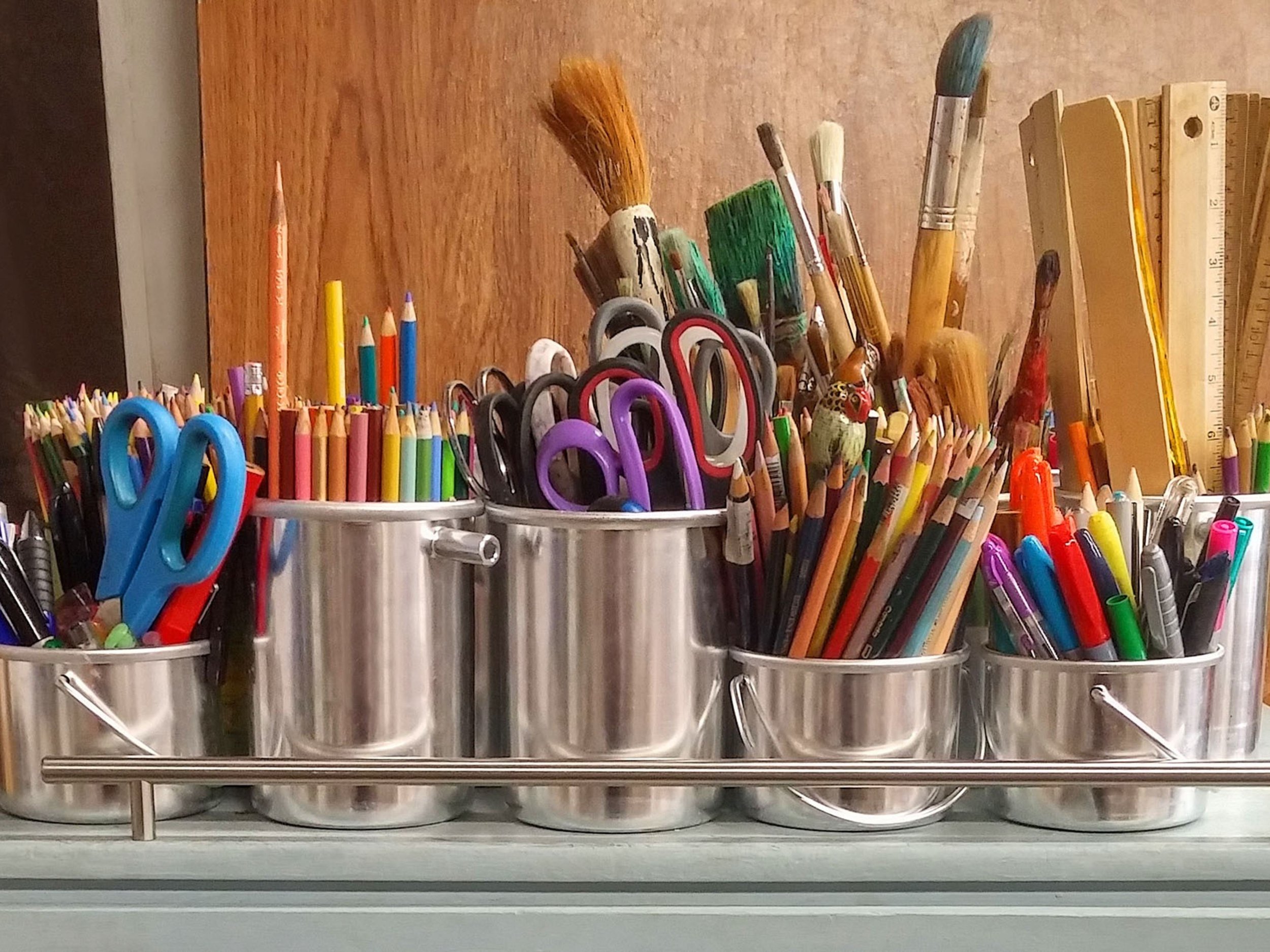
Our favorites: rolling carts. These are gold. A slim rolling cart can hold:
pencils,
notebooks,
curriculum,
scissors,
glue,
flashcards,
dry erase boards,
art supplies.
And when school is over? Roll it away. Done.
Individual child bins or caddies
Each child can have:
current workbook,
reading book,
pencils,
folder,
mini supplies.
This cuts down on the constant “Mom where is my…” every twelve minutes.
Drawer organizers or cabinet baskets
Perfect for:
stickers,
counting cubes,
markers,
learning games.
The goal is simple: homeschooling should be able to appear and disappear quickly.
Because when your school area is also your family living area, quick reset matters.

4. Use Vertical Space Like Your Life Depends On It
Small floor plan? Fine.
Use your walls.
This is one of the most overlooked small space homeschool ideas. You do not need more square footage - you need smarter storage.
Things that work beautifully:
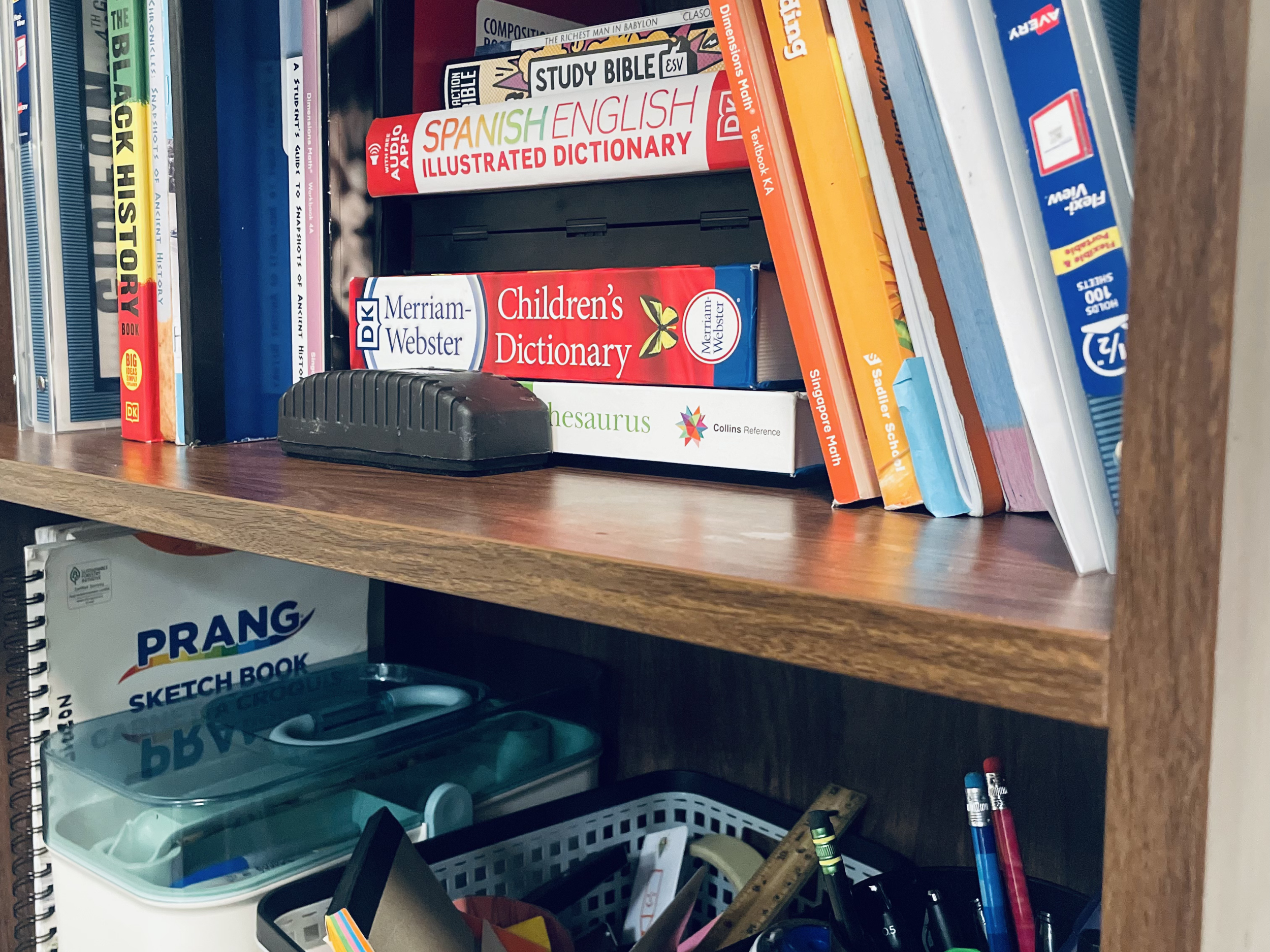
wall shelves for readers and chapter books
hanging file organizers
pegboards for supplies
command hooks for headphones or bags
wall calendars
magnetic boards for weekly plans
When materials move upward instead of outward, the room instantly feels less cluttered.
And bonus: kids can visually see what belongs where.
This helps with independence and cleanup.
Even one narrow bookshelf or mounted organizer can make a dramatic difference in how your homeschool functions.
5. Keep Homeschool Materials Minimal (Because More Stuff Does Not Equal Better Learning)
This one might sting a little. But it needs to be said. A lot of homeschool overwhelm is not caused by lack of space.
It’s caused by too much stuff.
Too many:
curriculum options,
workbooks,
bins,
random manipulatives,
educational toys,
printables,
“maybe we’ll use this someday” purchases.
In a small home, excess materials become visual stress very quickly. You do not need twenty subjects open at once.
You need what you’re actively using.
That’s it.
Store the rest.
Rotate the rest.
Donate the rest.
Your homeschool will feel lighter instantly.
This is one reason I’m such a huge believer in keeping homeschool simple and focused instead of trying to do all the things every day.
6. Turn Everyday Family Spaces Into Learning Spaces
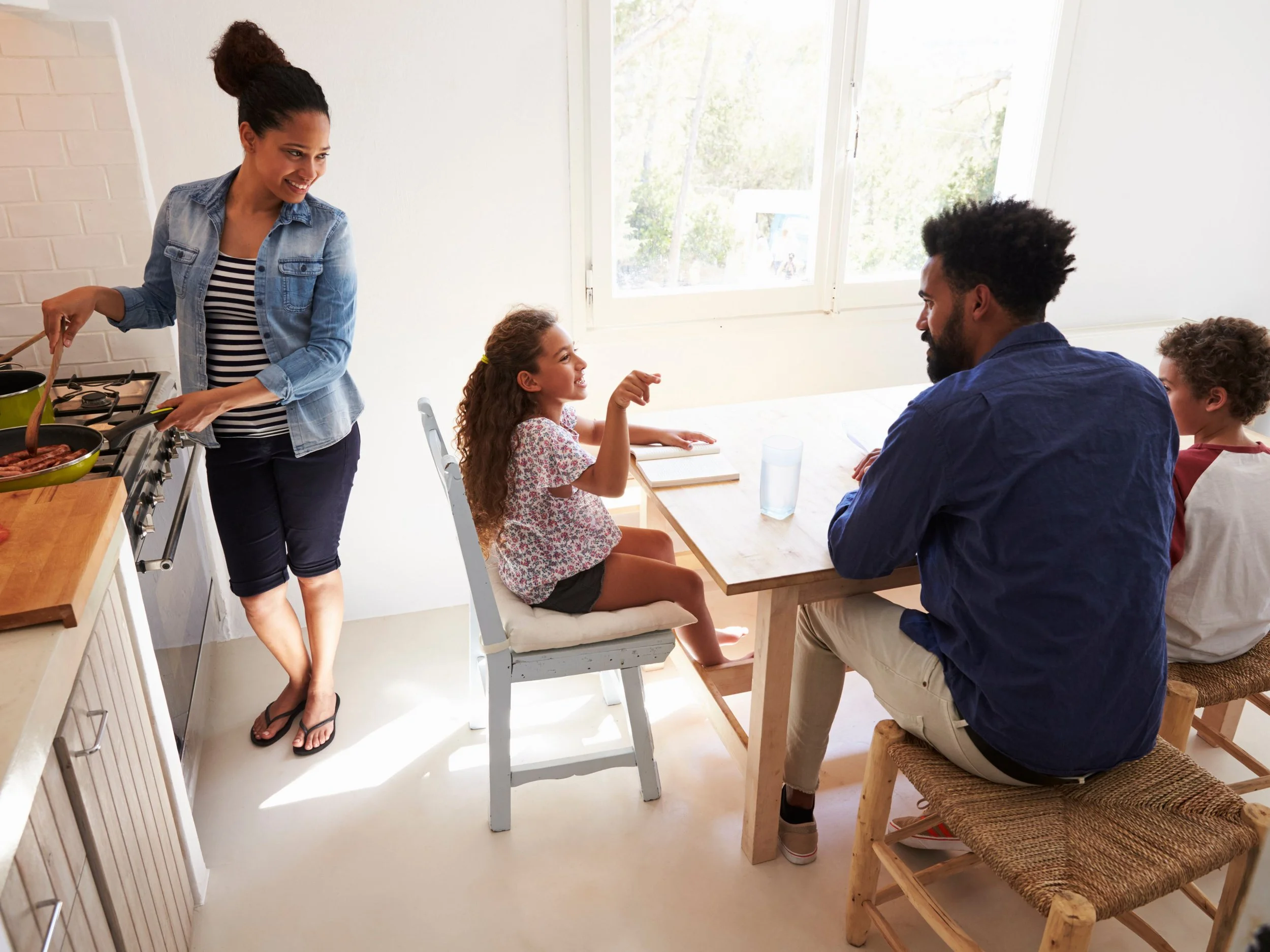
One of the hidden blessings of homeschooling without a homeschool room is this: learning naturally blends into life.
Your kitchen becomes:
baking math,
measuring science,
life skills.
Your couch becomes:
read aloud central,
history documentaries,
independent reading.
Your floor becomes:
puzzles,
blocks,
phonics games,
map work.
Your patio becomes:
messy art,
sensory bins,
nature observations.
Your home does not need to “look like school.” It just needs to support learning moments.
And often those moments happen better in relaxed shared spaces than at a stiff little desk anyway.

7. Get Out Of The House More Often Than You Think
This is the secret weapon of homeschooling in a small apartment or modest home: you are not confined to your walls.
When the house starts feeling tight:
leave.
Go to:
the library,
the park,
a nature trail,
a coffee shop,
grandparents’ house,
community classes.
Sometimes the best homeschool organization strategy is simply reducing the number of hours everyone is packed inside together.
Fresh scenery changes everybody’s mood.
Even reading under a tree can rescue a grumpy homeschool day.
(Perfect internal link spot: link to a field trip/resource/local learning post or homeschool burnout prevention post.)
8. Create A Quick Daily Reset Routine
This matters more than moms realize.
If homeschool materials stay exploded all over the house until bedtime, the entire home starts to feel mentally loud.
We do much better when there is a five to ten minute “school reset” after lessons.
Everyone helps:
books back in bins,
pencils in caddies,
papers filed,
table wiped,
cart rolled away.
Homeschool disappears. Home returns.
This tiny habit prevents your family from feeling like they live inside a classroom 24/7.
And it makes tomorrow morning easier too.

9. Flexibility Is The Real Goal - Not A Perfect Setup
Your setup will change. What works this month may annoy you next month.
You may move bins.
Rearrange furniture.
Get rid of shelves.
Try a new routine.
That does not mean you are failing.
It means you are building a homeschool around a living family.
Small space homeschooling requires experimenting until the flow feels natural.
Do not chase perfection. Chase function.
If the kids can learn, you can access materials, and your home still feels livable…you are winning.

Homeschooling In A Small Space Doesn’t have to Mean Limitations - It Can Actually Be A Blessing
I know it can feel discouraging when social media shows giant dreamy homeschool rooms that look like mini private schools.
But please hear me: those rooms are not what make homeschooling successful.
Your consistency does.
Your creativity does.
Your willingness to make ordinary spaces work does.
Some of our sweetest homeschool memories have happened around shared tables, messy counters, and living room couches - not in some perfect schoolroom.
So if you’ve been waiting for more space before you begin…this is your permission slip to start now.
Because homeschooling can absolutely thrive in the home you already have.

Tell Me - Are You Homeschooling In A Small Space Too?
What part feels hardest for you:
organization, storage, routine, or simply keeping the mess under control?
Drop it in the comments - I’d love to chat and share ideas!
If you like this post, share on Pinterest!
